
Classical Woodcarving
Classical woodcarving is a skill that almost died. In many countries the old chain of master and apprentice simply broke. I was lucky. At sixteen I became the only apprentice of a fine-art carver in Russia, and he handed the craft to me the old way, at the bench, face to face.
So now I try to pass it on. When I was first invited to teach a class, I was scared to death of my English. I went anyway, and I fell in love with teaching.
The School of Woodcarving
Today I run the School of Woodcarving, a 501(c)(3) non-profit. My in-person classes fill up in about eight minutes. The online lessons let people carve along with me at home, and I explain each cut on camera.
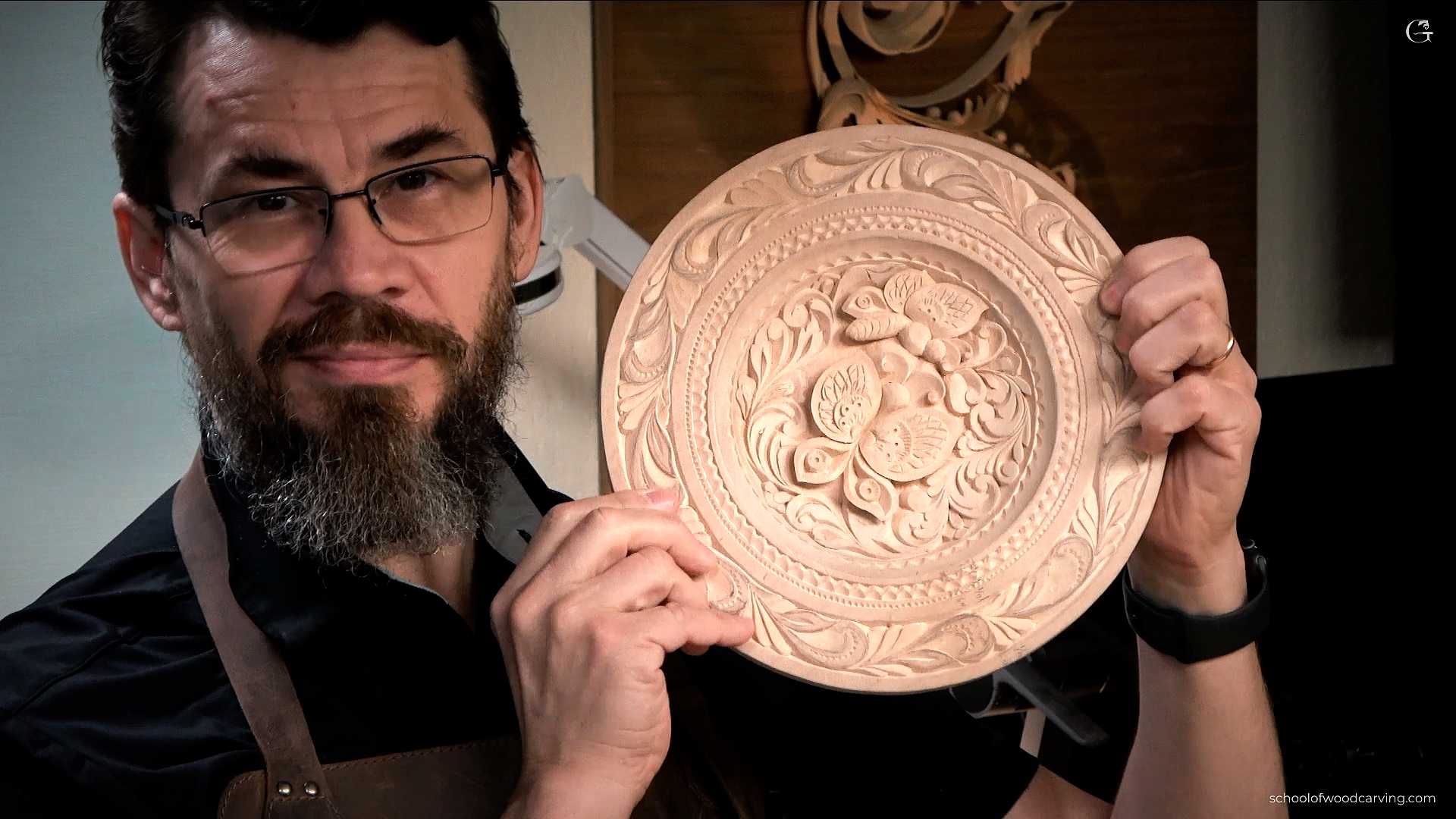
The money from the school goes to orphans and widows, and it pays for art lessons for gifted kids from poor families. I know how that feels. When my father left us, nobody could pay for mine.
Carving is good for your head, too. Working in three dimensions wakes up parts of the brain that drawing and painting never touch, and I believe it is one of the best defenses we have against getting old.

To learn, start at the school. To have a classical piece carved for your home, write to me here.
The work as historical study
Every commission I take starts as a research project, and only then becomes an order. Before anything is carved, I study the piece. I trace the motif back to its period and to the carvers who made it famous, like Grinling Gibbons in England, and I try to understand how their hands thought and moved. That way a skill that is slowly disappearing gets carried into one more new piece, the way carvers have worked for centuries.
That is why every carving from my shop is the only one of its kind. It is my reading of a historical style, never a copy taken from a pattern, and the grain, the line of each leaf and the depth of every undercut come out of that study. No two pieces come out the same. I don't make mass-produced objects. What you receive is a finished carving with the research, the design and a whole life of work behind it, and a small piece of an old art that did not get lost.
Every commission starts with a conversation.
Tell me about your project: a single ornament or a full architectural scheme.
Discuss Your Vision