
A lifetime
in the wood.
Alexander Grabovetskiy carves Baroque relief, acanthus, and architectural ornament drawn out of solid wood. He learned it as a boy, at his grandfather’s bench. This is the story of the work.
A craft carried in the blood
Carving runs deep in the Grabovetskiy family. His great-grandfather ran his own custom furniture and wood-carving business. His grandfather, Alexander’s first teacher, set a chisel in his hands as a boy, and his grandmother taught him the old ornamental techniques. Born in 1973 in Dimitrovgrad, on the Volga, he grew up in a house where wood was a language before it was a livelihood.
A face carved in stone, at six
At five he stood transfixed before a shop window of carved animals, asking how such a thing was even possible. At six he took his grandfather’s chisel and carved a human face, into stone. He learned everything, edge against material, the only way it could be learned.
He only gave me a knife, and a year to learn it. Everything I know about carving began there.
Alexander Grabovetskiy · on his apprenticeshipA year of nothing but the knife
At sixteen he became the apprentice of master carver Vladimir Tokarev. For more than a year Tokarev gave him only a knife, no gouges, until knife control was second nature. Those years taught him that mastery is patience, not speed: the hand has to be trained before the tool can be trusted.
A blade half an inch long
As a young man he was imprisoned for holding to his faith and refusing to serve in the Soviet Army. Even there he carved. He fashioned a blade under half an inch long and worked tiny boxes, and credits those skills with carrying him through. Freed after two years through an Amnesty International campaign, he never stopped carving.
Building it himself
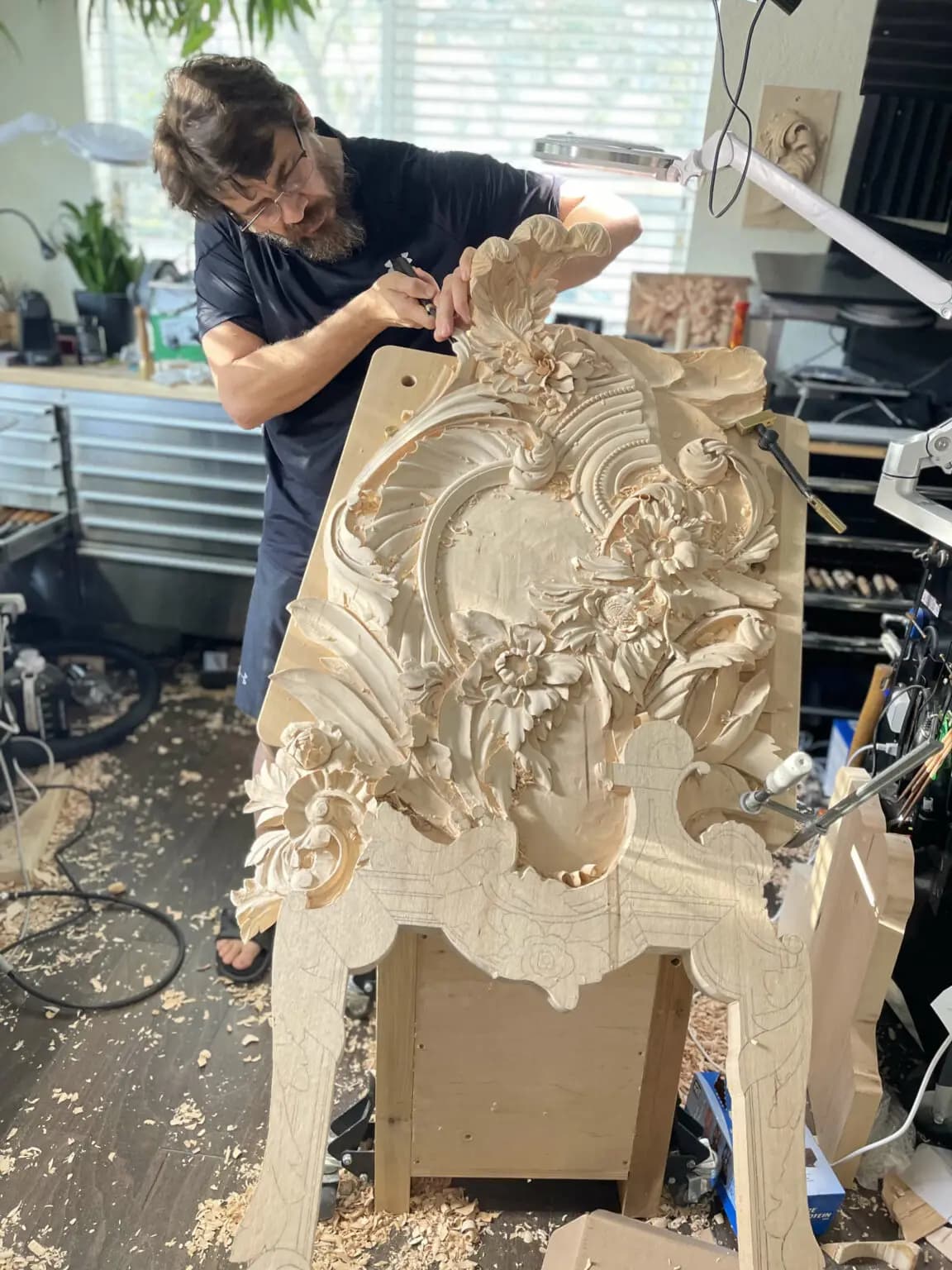
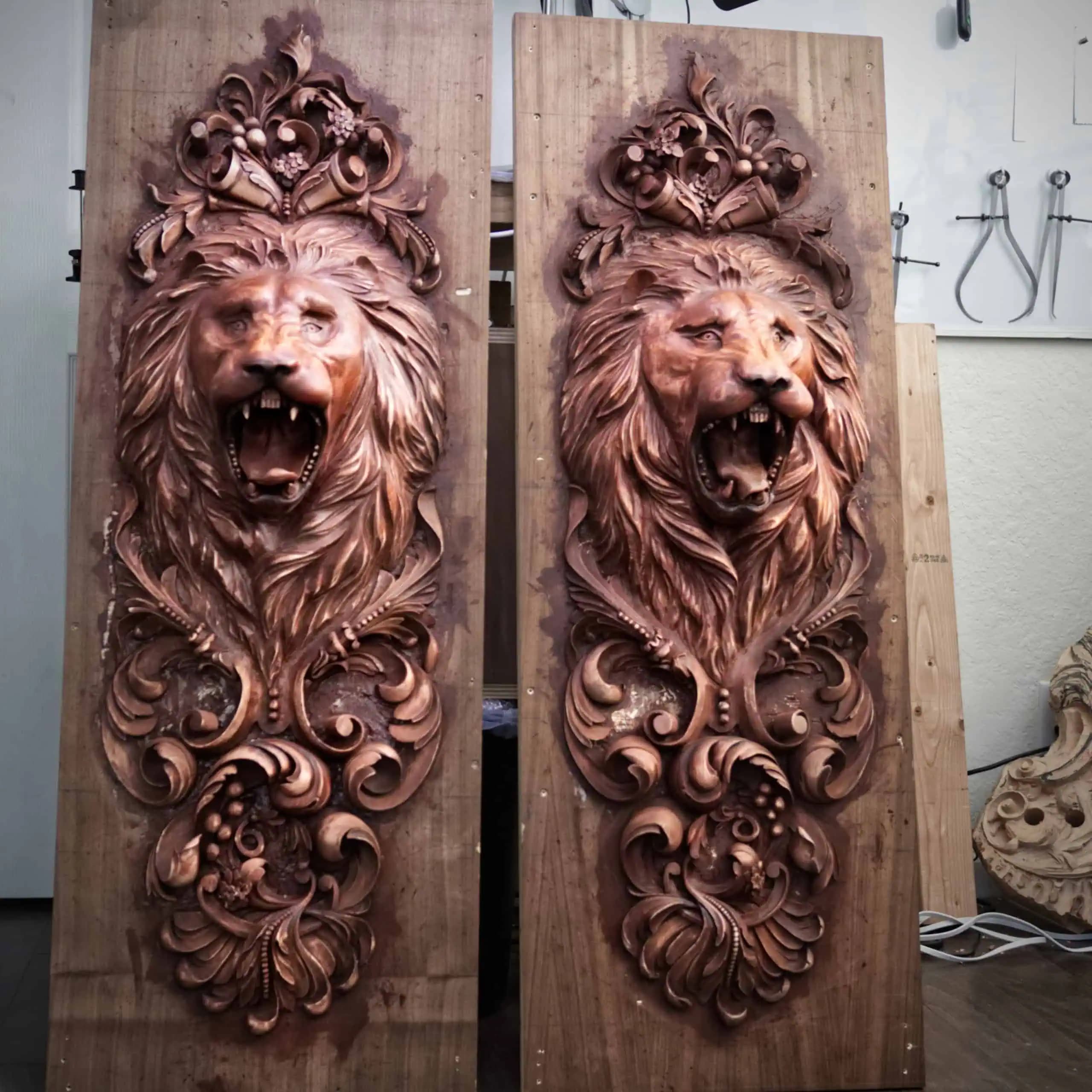
In 1996 he came to the United States as a political refugee with his wife Nadia and their young son, carrying little more than a pillow. He arrived with almost nothing, but he had a trade, and almost from the start he built and owned his own businesses on it. Across Indiana, the Carolinas, and finally South Florida he founded and ran his own companies: millwork shops, finish carpentry, and custom home building, among them his own firm Aalmark in Goshen, Indiana. The work ran from architectural millwork and cabinetry to fireplace mantels, coffered ceilings, and his own ornamental wood carving. In 2017, with the businesses thriving, he chose what he loved most: to carve full time.
Carved, never cast
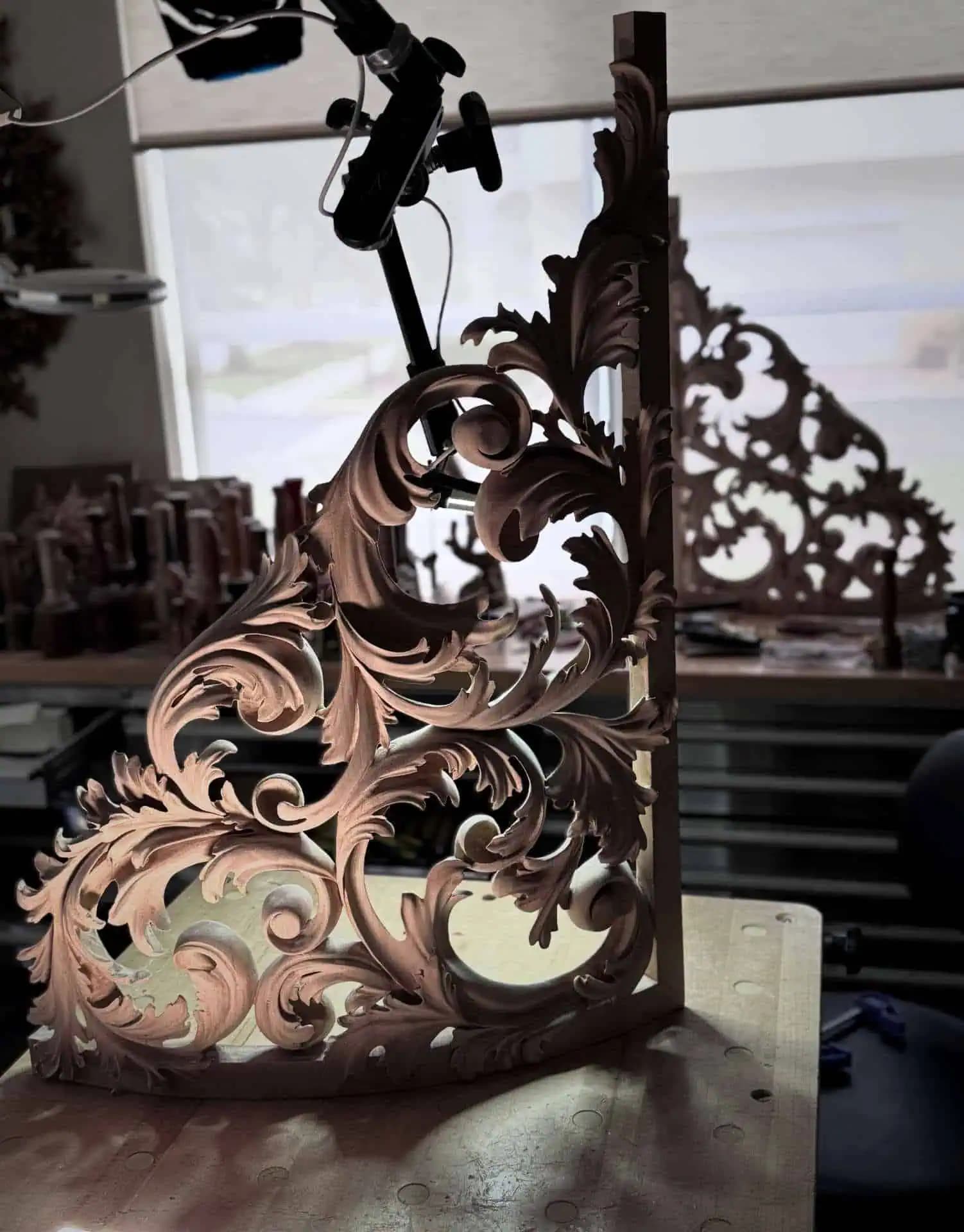
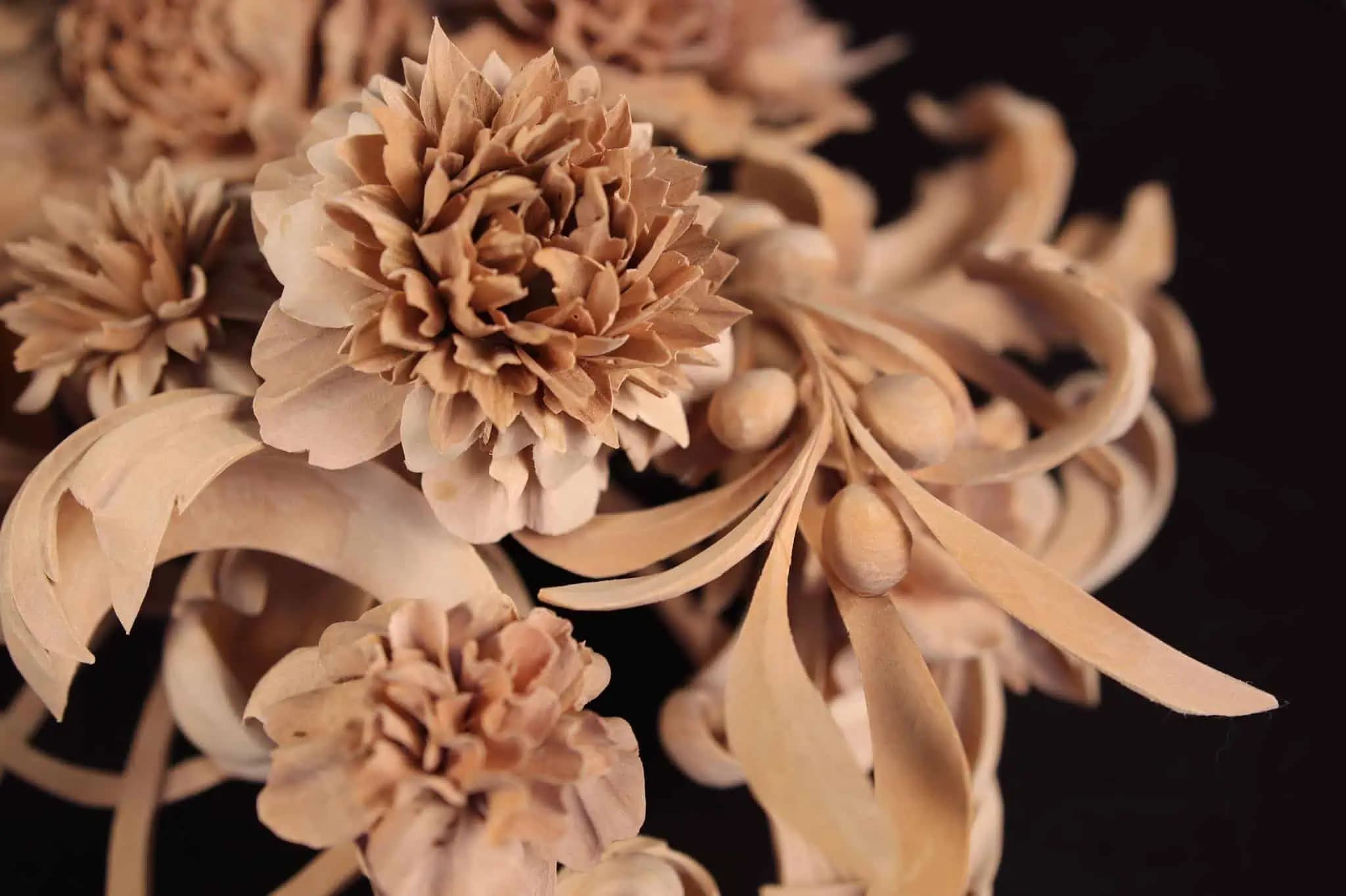
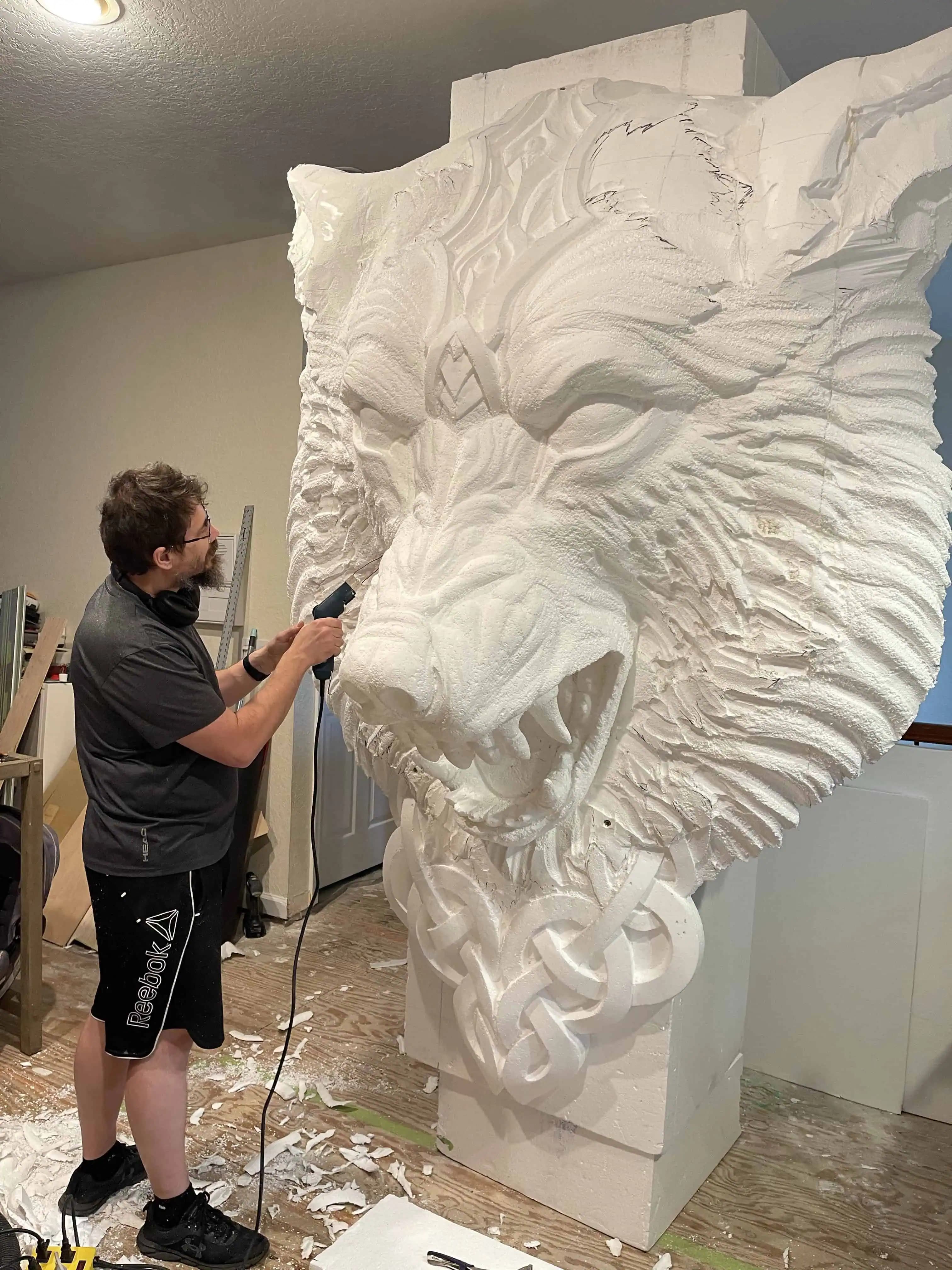
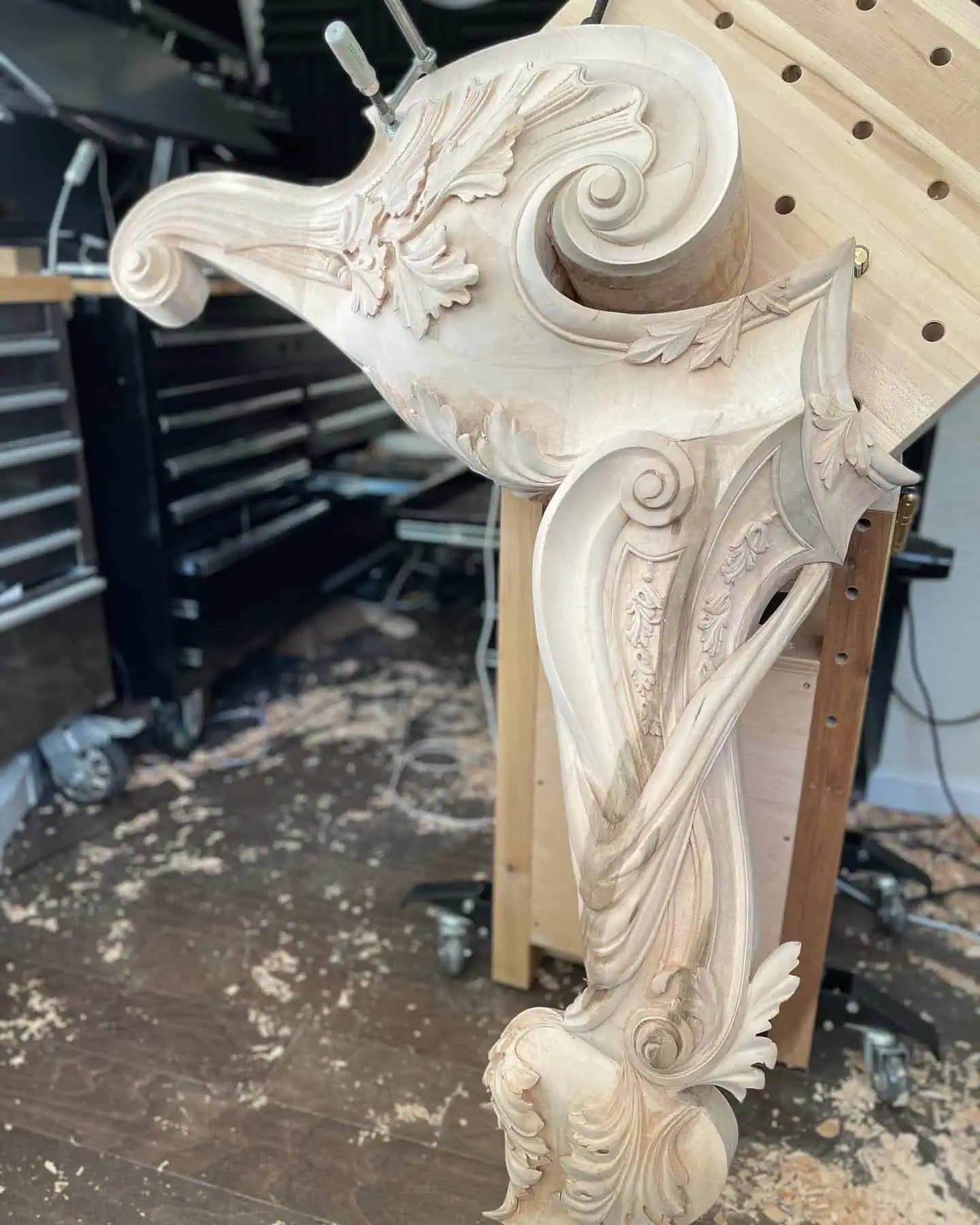
He undercuts deep for shadow, sets out his compositions on the golden ratio, and carries forward the language of Grinling Gibbons in limewood, oak, mahogany, and cherry. His work spans sculpture, high and low relief, architectural, and ornamental carving. Give him a block of wood and he can shape almost anything from it. Today his ornament rises on pipe-organ cases, gilded interiors, and architectural schemes around the world.
A life in wood
| 1973 | Born in Dimitrovgrad, on the Volga, into a family of carvers. |
|---|---|
| 1979 | First carving at six, with his grandfather’s chisel. |
| 1989 | Apprenticed to master carver Vladimir Tokarev |
| 1996 | Immigrated to the United States as a political refugee, with his wife Nadia and their young son. |
| 2012 | Named International Woodcarver of the Year (Woodworkers Institute), first place for “The Wall Decoration.” |
| 2017 | Chose to carve full time. |
I want the shadow to move across the carving as the light changes, so the wood feels alive the whole day through.
Alexander Grabovetskiy · Master Wood CarverNamed among the finest carvers at work today
International Woodcarver of the Year, 2012 (Woodworkers Institute) · Editors’ Choice, Popular Woodworking Excellence Awards, 2015 · featured in Fine Woodworking, The Epoch Times, and Woodcarving Magazine.
Admirably skillful, crisp, and fluent.
David Esterly · Master Wood Carver & AuthorElegant carving — it sings to me!
Chris Pye · Master Wood Carver & AuthorStunning work.
Mark Baker · Guild of Master CraftsmenAbout Alexander & the craft
Who is Alexander Grabovetskiy?+
Alexander Grabovetskiy (born 1973 in Dimitrovgrad, Russia) is a master wood carver based in the United States, specialising in custom, architectural, ornamental, and pipe-organ wood carving in the Baroque, Rococo, and Gothic traditions. He was named International Woodcarver of the Year in 2012 by the Woodworkers Institute for his panel “The Wall Decoration.”
What is “The Wall Decoration”?+
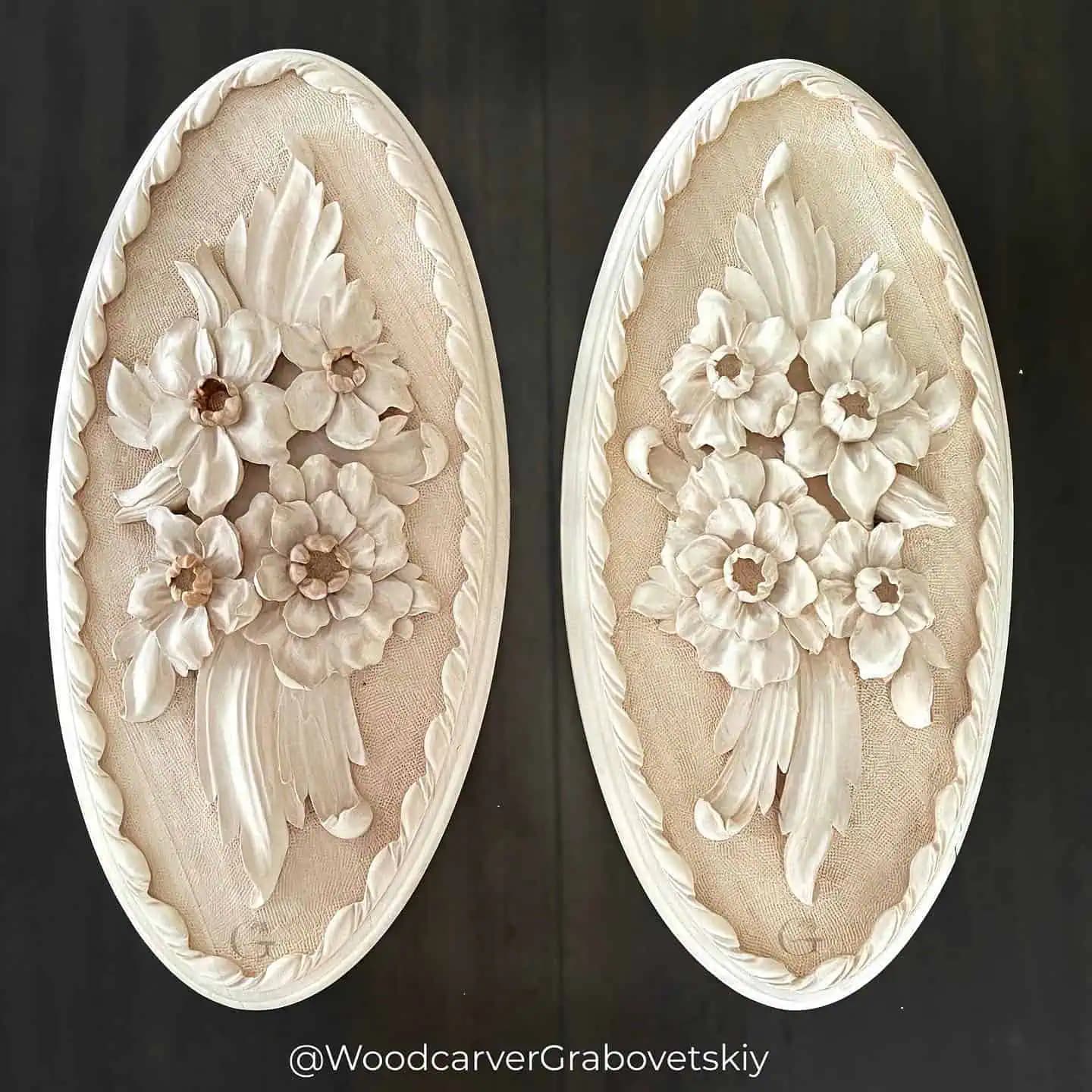
“The Wall Decoration” is a high-relief panel of flowers and acanthus foliage that won Alexander Grabovetskiy first place and the title of International Woodcarver of the Year 2012, awarded by the Woodworkers Institute and published in Woodcarving Magazine.
What wood does he carve in?+
He works in European linden (the traditional wood of Grinling Gibbons), oak, mahogany, and cherry, depending on the commission, the period style, and where the finished piece will live.
Selected press & publications
- Carving with ConflictFine Woodworking · 2021
- A Master Carver’s Journey from Soviet Repression to America’s FreedomThe Epoch Times · 2021
- Alexander Grabovetskiy on his work and his woodcarving schoolWoodcarving Magazine (GMC), Issue 180 · 2021
- One of the best wood carvers in the world is teaching a class in MaineNewsCenter Maine (NBC) · 2021
- A Master of Manual Wood CarvingRevista din Lemn (Romania) · 2017
- Award-Winning Woodworking from PWM Readers — 2015 Excellence AwardsPopular Woodworking · 2015
- Show Us Your WoodcarvingWood News Online (Highland Woodworking) · 2013
- Alexander Grabovetskiy — carving in the Gibbons traditionGrinling Gibbons Photos · 2021
- Immigrant establishes woodworking firmThe Goshen News · 1998
- Alexander GrabovetskiyWikipedia
In the studio
The work as historical study
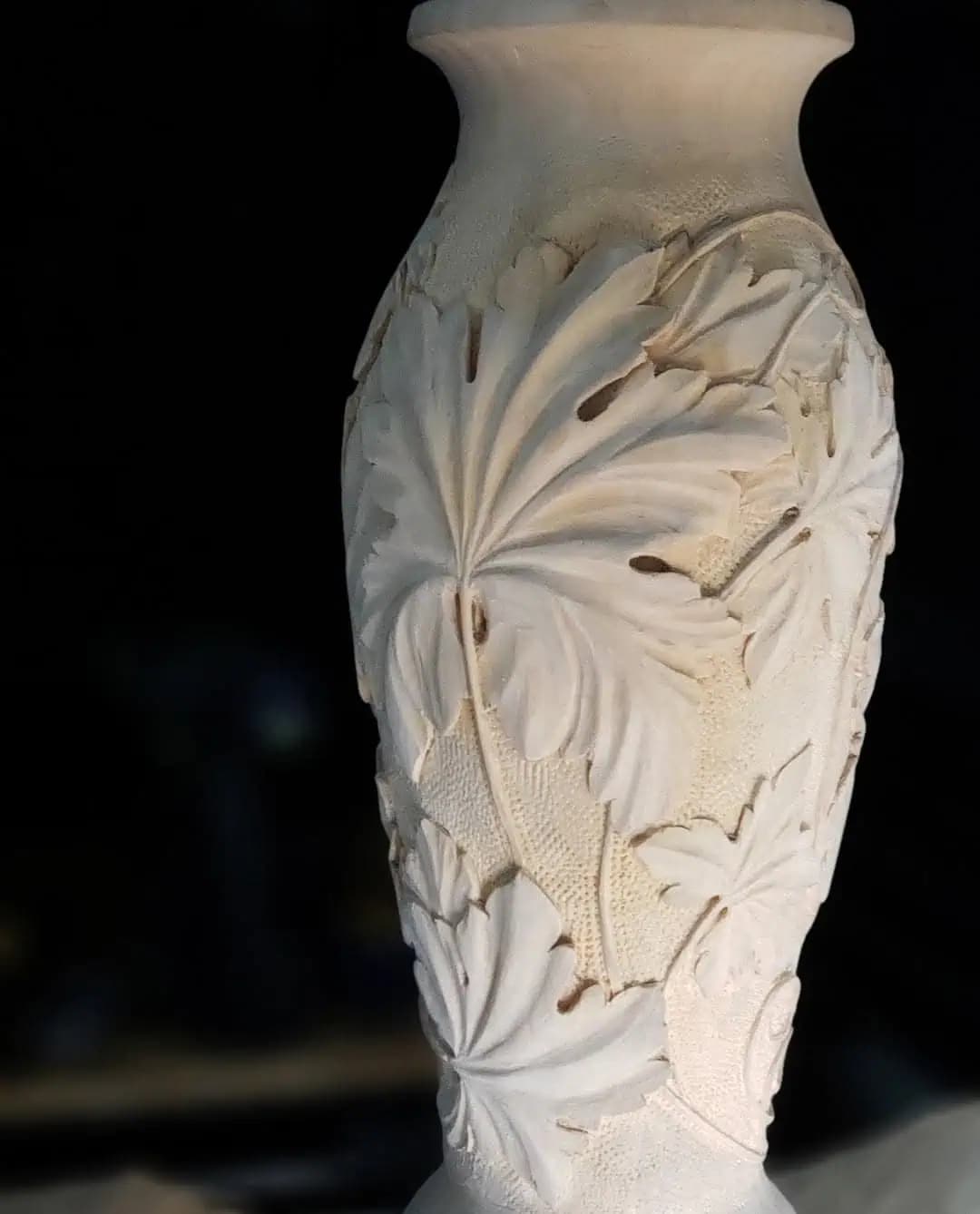
Every commission starts as a research project, not just an order. Before a single cut, the work is to study the piece: to trace a motif back to its period and its masters, to understand how the hand that first carved it thought and moved, and to carry a vanishing skill forward into a new piece, the way carvers have worked for centuries.
A carving from this studio is, for that reason, one of a kind: an interpretation of a historical style, never a copy stamped from a pattern. The grain of the wood, the line of the leaf, the depth of the undercut all record a study and a hand, and no two are ever the same. The studio doesn’t sell a mass-produced object. It delivers a finished carving with the scholarship, the design, and a lifetime of skill behind it. Every piece also keeps a little of a centuries-old art from being lost.
Commission a Project
From a single ornament to a full architectural scheme. Tell me about your project.
Discuss Your Vision