
Ornamental Wood Carving by Master Wood Carver Alexander Grabovetskiy
Ornamental wood carving is carving that serves a building or a piece of furniture. It follows rules. A leaf repeats along a molding, a scroll turns and turns again, and the eye reads it like music.
My teacher put it simply. Design is the law of space, rhythm and repetition, plus knowing what your tools can do. You can't draw nice curves on paper and hope for the best, because the curve has to fit the gouge that will cut it.
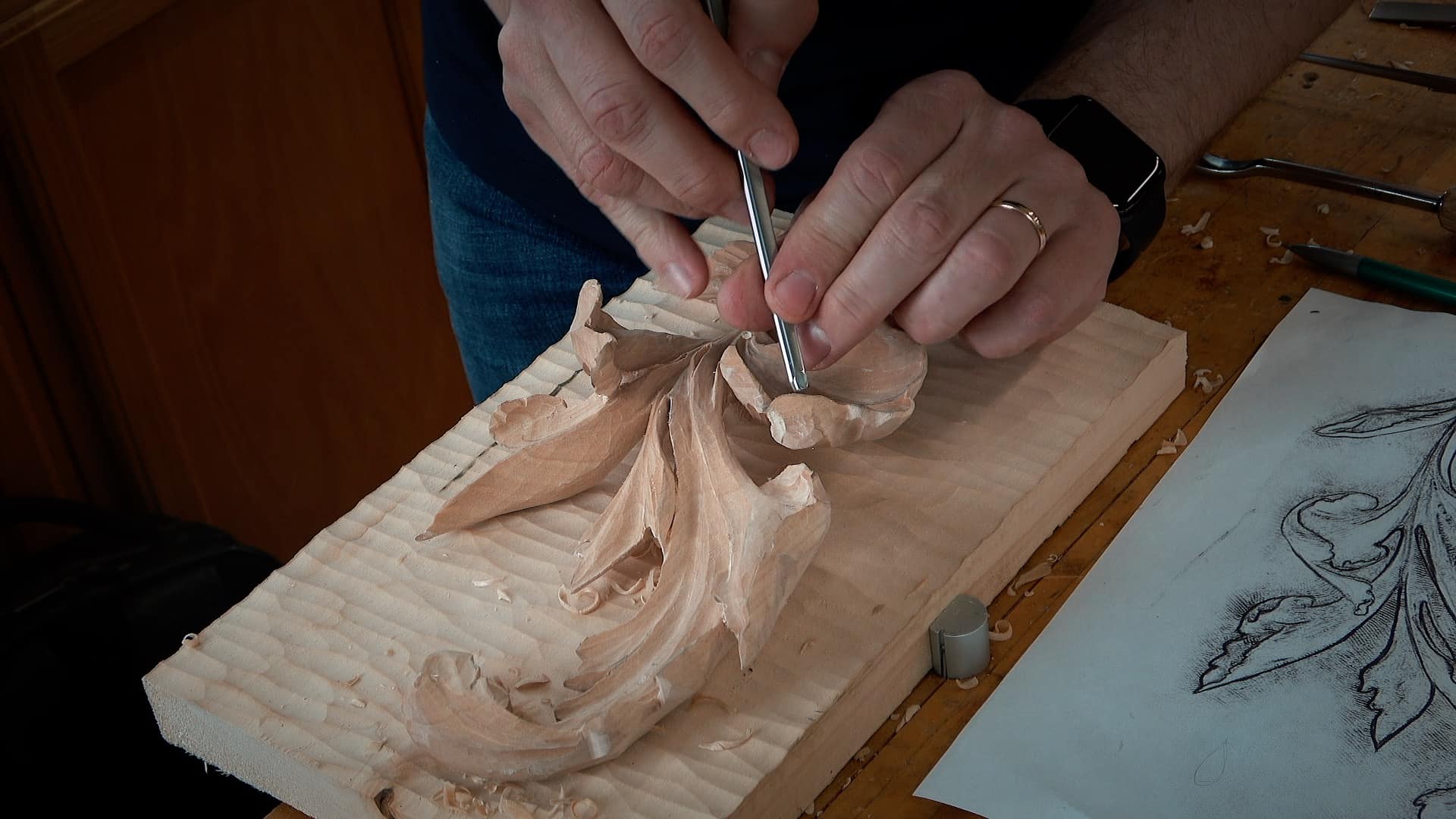
The acanthus leaf
The acanthus has been carved for more than two thousand years. The Greeks put it on their column tops, the Romans made it fatter, and Baroque carvers made it curl and twist like a flame.
Every ornamental carver has to learn it. Nobody ever finishes learning it.
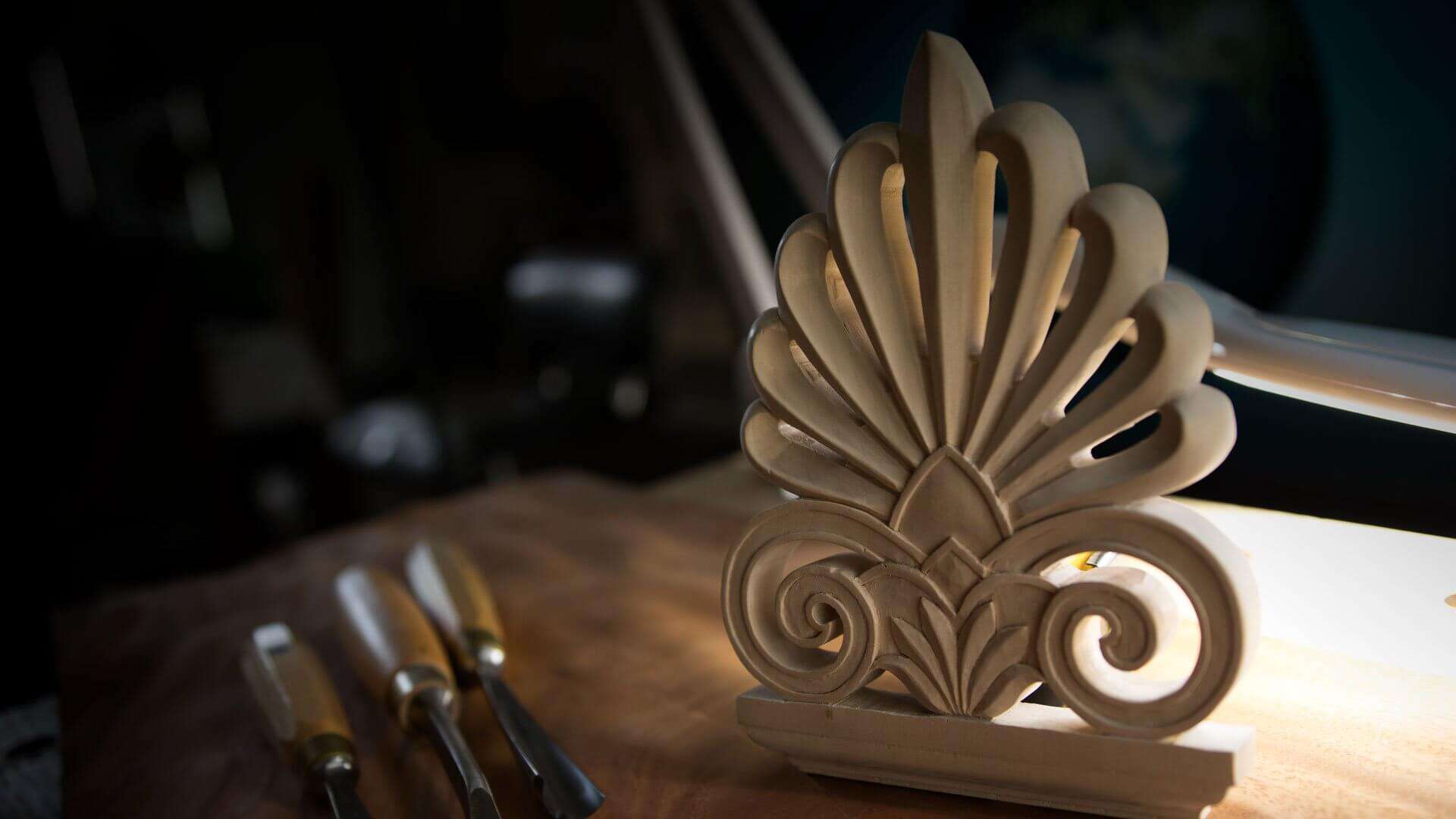
The Greek acroterion is another very old shape. It is the palmette that stood on the corners and the peak of a temple roof. Put one on a cabinet or a clock and the top suddenly looks finished, like it got its crown.
Running ornament is the hardest to get right, odd as that sounds. A bead or a leaf that repeats for ten feet has to stay even the whole way, and it has to turn a corner without a break. More of it lives in moldings and ornament and in modern acanthus. If you need ornament for a house or a piece of furniture, write to me.
The work as historical study
Every commission I take starts as a research project, and only then becomes an order. Before anything is carved, I study the piece. I trace the motif back to its period and to the carvers who made it famous, like Grinling Gibbons in England, and I try to understand how their hands thought and moved. That way a skill that is slowly disappearing gets carried into one more new piece, the way carvers have worked for centuries.
That is why every carving from my shop is the only one of its kind. It is my reading of a historical style, never a copy taken from a pattern, and the grain, the line of each leaf and the depth of every undercut come out of that study. No two pieces come out the same. I don't make mass-produced objects. What you receive is a finished carving with the research, the design and a whole life of work behind it, and a small piece of an old art that did not get lost.
Every commission starts with a conversation.
Tell me about your project: a single ornament or a full architectural scheme.
Discuss Your Vision