
Woodworking Artist

The carver I learn from most, after my own teacher, died more than 250 years before I was born. His name was Grinling Gibbons.
Gibbons worked in England in the late 1600s. He carved flowers, fruit, birds and lace in limewood, so thin and so deep that the wood seems to float off the wall. When clients ask me for "that Gibbons look," they mean that feeling of lightness. It comes from undercutting, and from a lot of courage, because one wrong cut and a stem is gone.
Shadow is the design
I cut deep behind every leaf. To some people the undercut looks extreme, but it brings out shadows like nothing else can, and to me the shadow is the most important thing in a carving. While I work, my mind is always looking for the play of light and dark.

The lion heads in the photo show it well. Look at the mane: the deepest places are where the light can't reach, and that is why the face seems to push out of the wood toward you.
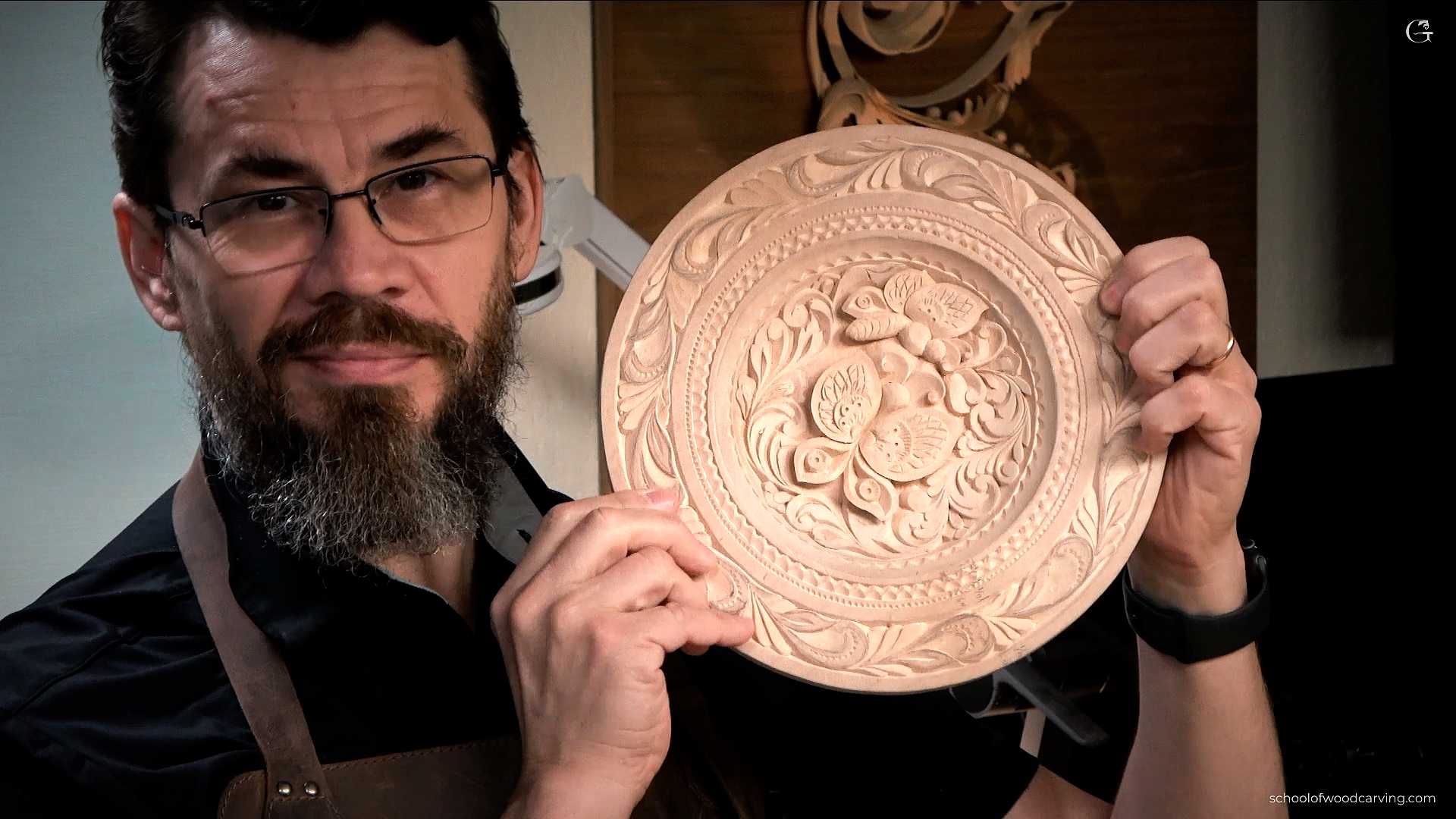
Some of this I now teach at the School of Woodcarving. The rest you can see in the heritage collections. If you want something carved in the old way, write to me.
The work as historical study
Every commission I take starts as a research project, and only then becomes an order. Before anything is carved, I study the piece. I trace the motif back to its period and to the carvers who made it famous, like Grinling Gibbons in England, and I try to understand how their hands thought and moved. That way a skill that is slowly disappearing gets carried into one more new piece, the way carvers have worked for centuries.
That is why every carving from my shop is the only one of its kind. It is my reading of a historical style, never a copy taken from a pattern, and the grain, the line of each leaf and the depth of every undercut come out of that study. No two pieces come out the same. I don't make mass-produced objects. What you receive is a finished carving with the research, the design and a whole life of work behind it, and a small piece of an old art that did not get lost.
Every commission starts with a conversation.
Tell me about your project: a single ornament or a full architectural scheme.
Discuss Your Vision