

Carved for you, to outlive us all.
Rococo Woodcarver in Liberia
You found this page while looking for a carver in Liberia. My name is Alexander Grabovetskiy, and I am a wood carver. I would be glad to carve something for a home in your part of the world, whether it is one small rosette or a whole paneled room.

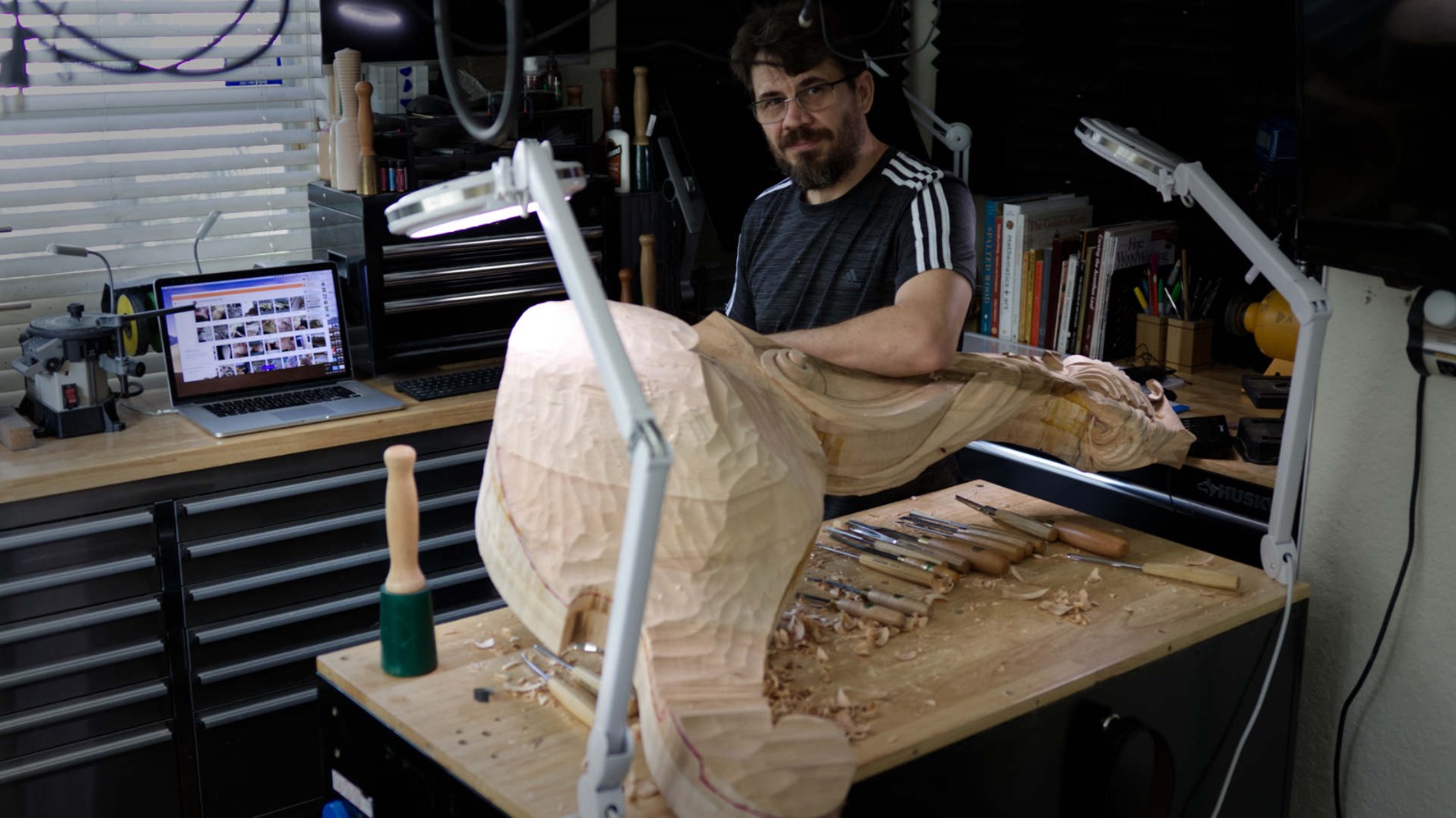
Wood is in my family. My great-grandfather was a cabinetmaker who worked mahogany in the Chippendale style. When I was six, my grandfather gave me my first chisel, and I ran straight to a brick to carve a face. The chisel died that day, but the love for carving was born the same day, and it never left me.
What happens at my bench
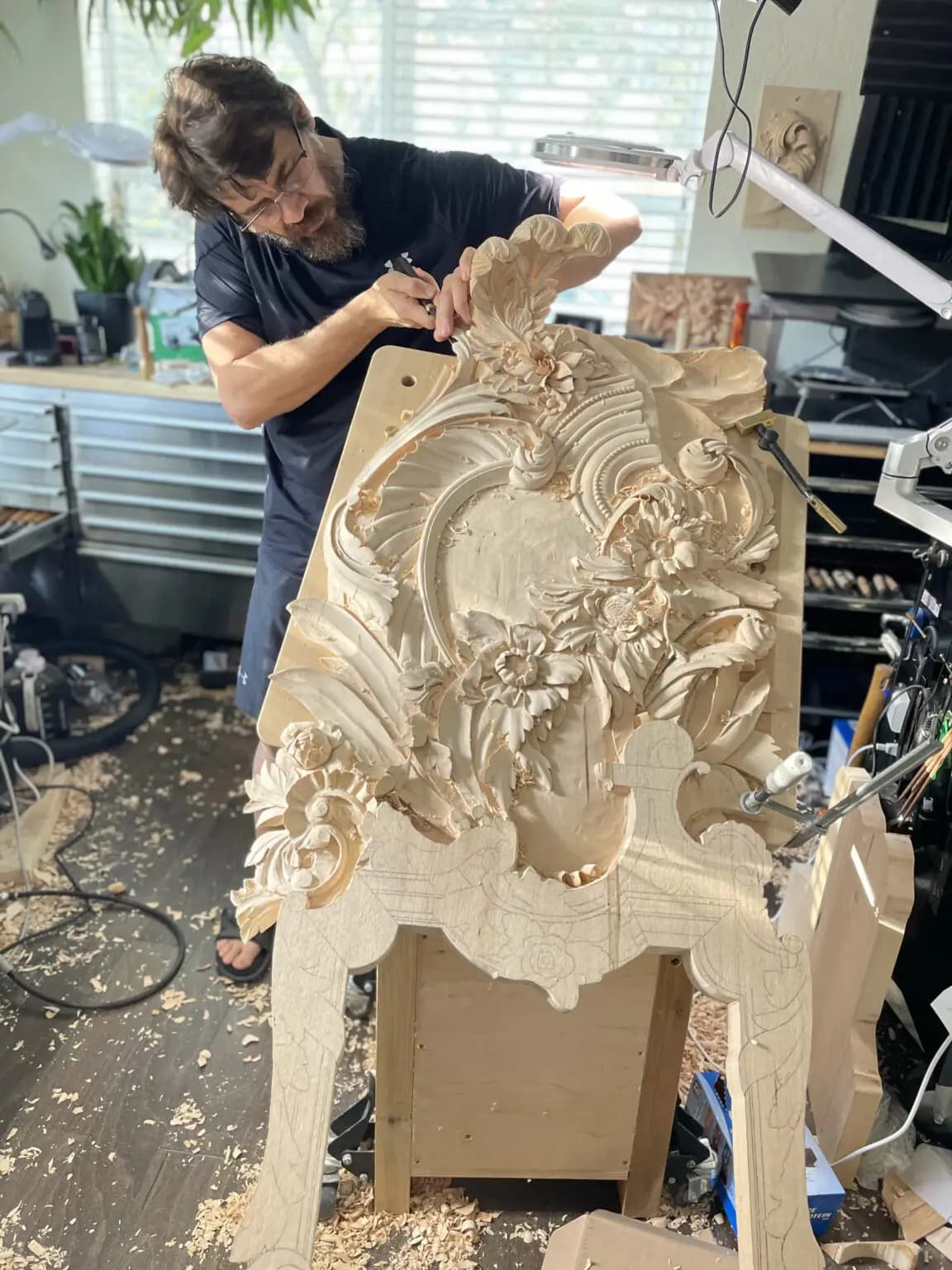
My carving starts on paper, full size, before any wood is cut. That drawing decides more than people think. I work out the rhythm of the leaves and where the deep shadows will fall, because a carving is seen from ten feet away far more often than from ten inches. A big piece can take months.
Before I cut anything, I study. For a Baroque frame I go back to how Baroque carvers really built their leaves, how deep they went and where they stopped. For a garland in the manner of Grinling Gibbons, I go back to Gibbons himself. Here a commission is a study first and a carving second.
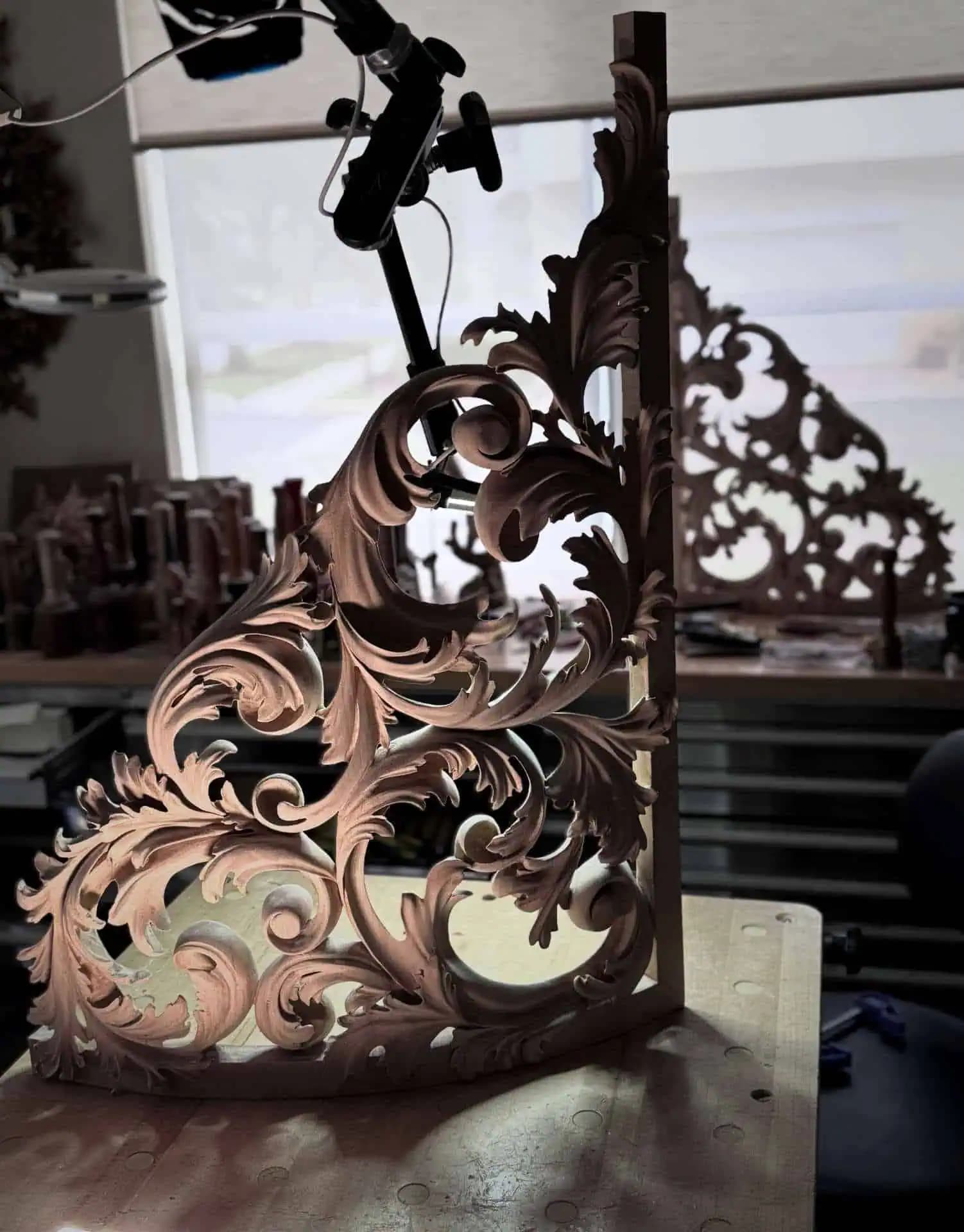
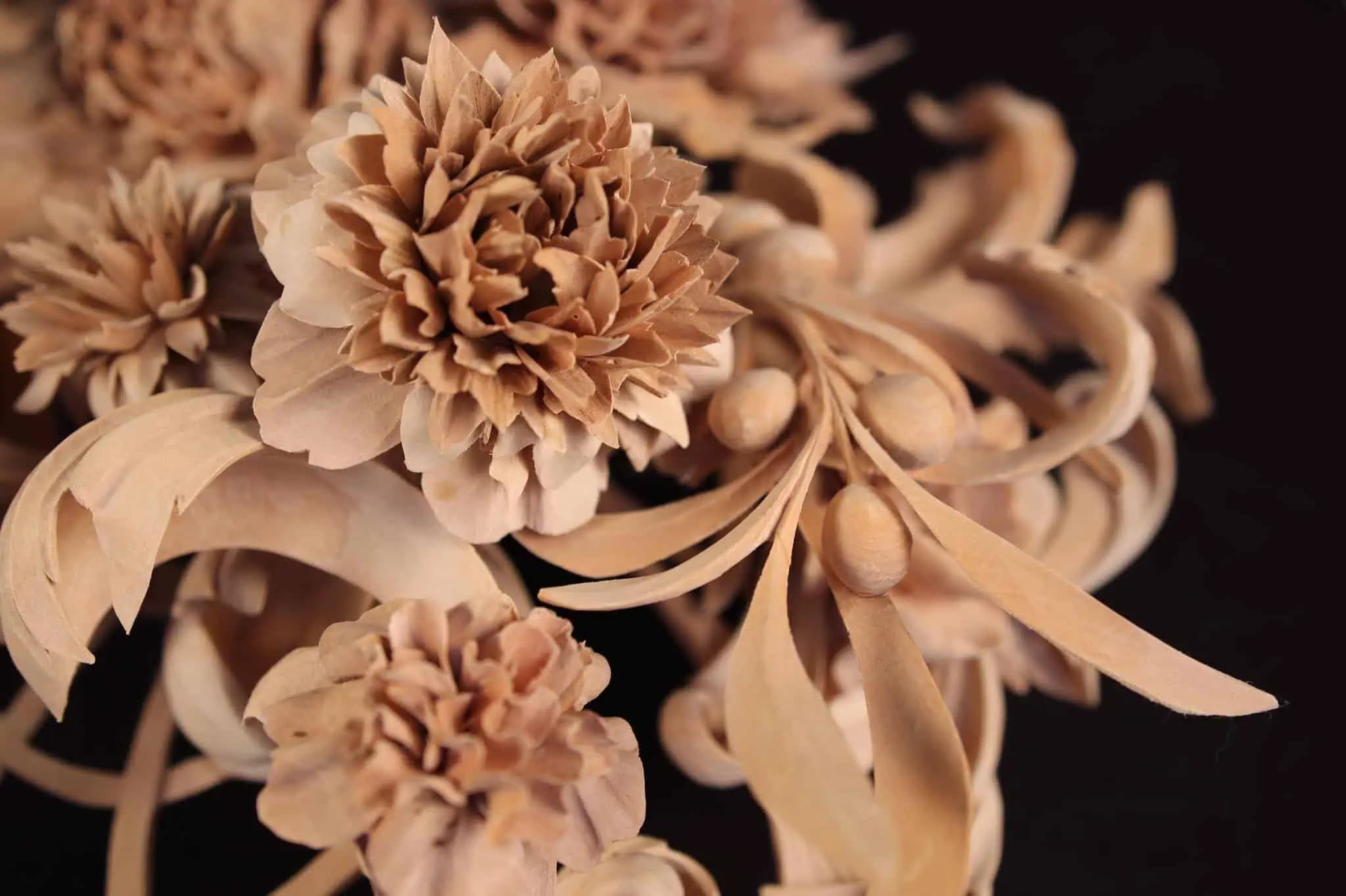
Western ornament grew out of the acanthus leaf, and every carver has to learn it. You'll find it in modern acanthus and in moldings and ornament, where one leaf repeats for feet and has to turn a corner without a break. For flowers, see the sunflowers.
In 2012 my panel "Wall Decoration" won first place, and the Woodworkers Institute named me International Woodcarver of the Year. The panel still matters more to me than the title.

Tell me about your project on the contact page. Even a rough idea and one blurry phone picture are enough for us to begin a good, honest conversation about the work.
In the studio
From first sketch to installed carving.
Every commission, for Liberia or anywhere else in the world, goes the same way, from the first conversation to the finished piece set in its place.
- 01
We talk it through
It starts with a conversation about your drawings, your photos or just a rough idea, and about the room where the piece will live.
- 02
Drawing & estimate
I draw the ornament to scale and send a clear estimate and timeline. Nothing is carved until we agree on the design and the price.
- 03
The carving
The carving itself takes the longest. Weeks for a small piece, months for a big one.
- 04
Crated & delivered
The finished carving is sealed, crated and shipped ready to install. When it has to join older work, it is matched to the millwork that is already there.
A standard set over forty years.
I carve for Liberia architects, designers and churches, and my work stands in private homes and museums around the world.
Forty years at the bench
Four decades of architectural and ornamental commissions for clients worldwide.
Woodcarver of the Year
Named International Woodcarver of the Year in 2012 by the Woodworkers Institute.
One of the best wood carvers in the world.NewsCenter Maine (NBC), 2021
Rococo Woodcarver in Liberia
Do you take rococo woodcarver commissions in Liberia?+
Yes. I carve architectural and ornamental work for clients in Liberia and around the world, crated and shipped ready to install. Most commissions begin with a short talk about your project, plus drawings or a few reference photos.
What kinds of wood carving do you make?+
Baroque and Rococo ornament, architectural carving (capitals, corbels, friezes, mantels, panels and doors), pipe organ cases and shades, foliage in the manner of Grinling Gibbons, figural reliefs, mirror and picture frames, and carving for custom furniture.
How long does a commissioned carving take?+
It depends on the size and the detail. A single ornament can take a couple of weeks, and a full architectural scheme can take several months. You get a clear timeline with the estimate, before any work begins.
Can you match an existing carving or a historical style?+
Yes. I often reproduce or extend historical work and match the millwork that is already there, so the new piece sits beside the old one in the right period, with the right profile and finish.
Do you work with architects and interior designers?+
All the time. I work from drawings and CAD, send samples, and carve to spec for homes, churches and commercial projects in Liberia and beyond.

Foliage and lace, cut from a single block.
The same hand that carves for Liberia carves for private estates and museums worldwide.
The work as historical study
Every commission I take starts as a research project, and only then becomes an order. Before anything is carved, I study the piece. I trace the motif back to its period and to the carvers who made it famous, like Grinling Gibbons in England, and I try to understand how their hands thought and moved. That way a skill that is slowly disappearing gets carried into one more new piece, the way carvers have worked for centuries.
That is why every carving from my shop is the only one of its kind. It is my reading of a historical style, never a copy taken from a pattern, and the grain, the line of each leaf and the depth of every undercut come out of that study. No two pieces come out the same. I don't make mass-produced objects. What you receive is a finished carving with the research, the design and a whole life of work behind it, and a small piece of an old art that did not get lost.
Every commission starts with a conversation.
Tell me about your project: a single ornament or a full architectural scheme.
Discuss Your Vision