
- Discipline
- Architectural
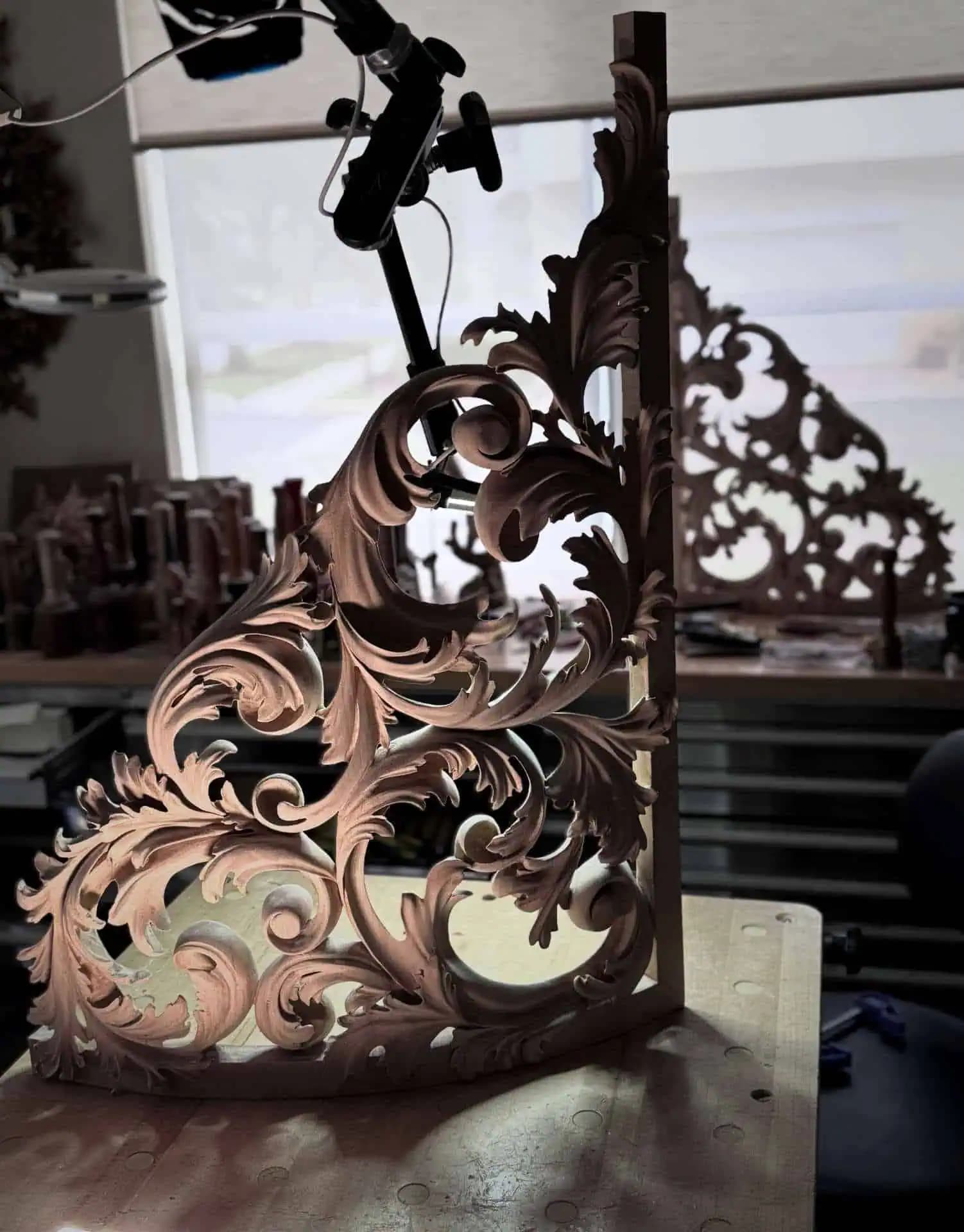
I carved these free-standing shades for a concert pipe organ. The acanthus and the scrolls are cut right through the board, so the pipes can still breathe while the whole organ wears its ornament like a crown.
No molds and no shortcuts. Limewood and oak worked until the grain itself becomes ornament. That slowness is what Baroque relief carving takes.
From the studio of Alexander Grabovetskiy


From the studio
The work as historical study
Every commission I take starts as a research project, and only then becomes an order. Before anything is carved, I study the piece. I trace the motif back to its period and to the carvers who made it famous, like Grinling Gibbons in England, and I try to understand how their hands thought and moved. That way a skill that is slowly disappearing gets carried into one more new piece, the way carvers have worked for centuries.
That is why every carving from my shop is the only one of its kind. It is my reading of a historical style, never a copy taken from a pattern, and the grain, the line of each leaf and the depth of every undercut come out of that study. No two pieces come out the same. I don't make mass-produced objects. What you receive is a finished carving with the research, the design and a whole life of work behind it, and a small piece of an old art that did not get lost.
Every commission starts with a conversation.
Tell me about your project: a single ornament or a full architectural scheme.
Discuss Your Vision